
Photography has come a long way from the 19th-century daguerreotypes that required subjects to still for 20 minutes or more. Even with modern cameras, attempting to capture moving details often results in fuzzy frames. So you can appreciate the level of precision needed for a clear picture of the miniscule arteries of a beating heart.
Big picture
A computed tomography coronary angiogram (CTCA) creates a three-dimensional picture of the coronary arteries by imaging the whole heart in a single cardiac cycle (a window of about 0.8 seconds). “We can’t stop the heart—it’s always in motion,” explains Roper St. Francis Healthcare cardiologist Dr. William Yarbrough. “So, the faster the CT scanner, the less blurry the image.”
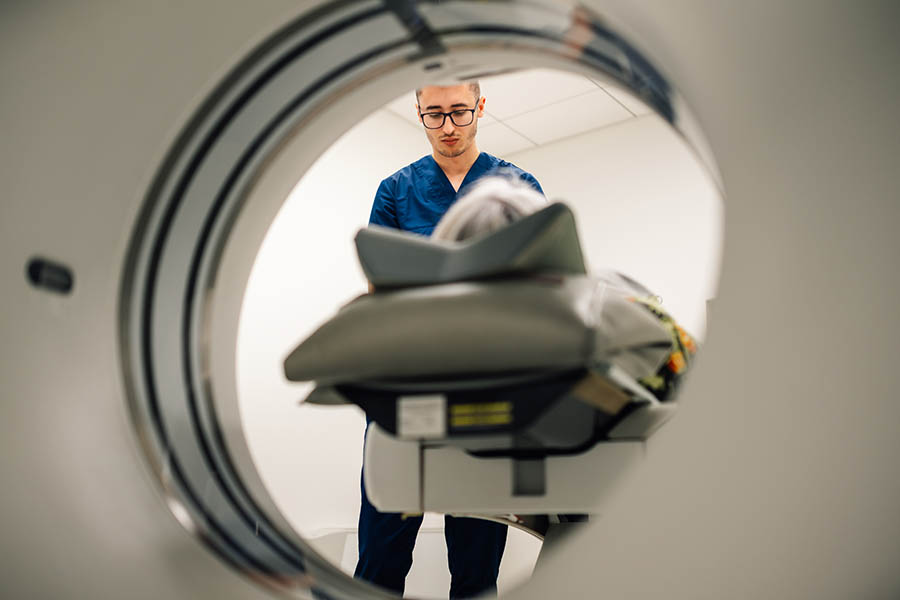
As part of its expansion, Roper St. Francis Berkeley Hospital has upgraded its CTCA technology, bringing in GE’s premium Revolution Apex Platform to the new Heart & Vascular Center. “This better-quality scanner delivers clearer, more diagnostic pictures than we’ve ever had before,” says Dr. Yarbrough, noting that the system soon plans to add a second scanner to its Mount Pleasant Hospital. “Roper St. Francis Healthcare has an amazing cardiovascular service line, and the introduction of this scanner raises our technology to that level.”
Precision performance
Over the past few years, doctors’ reliance on CTCAs has increased nationwide, and with good reason. This quick, painless, non-invasive outpatient procedure can detect arterial blockages just millimeters in size as well as structural abnormalities and heart function. The findings help cardiologists more definitively diagnose (or rule out) heart disease and determine the best treatment plan.
“Coronary blockages are still the number one cause of death in our country—more than all cancers combined,” says Dr. Yarbrough. So, it’s no surprise that most patients blame chest pains on their heart. Nine times out of 10, though, those pains are caused by something else, like heartburn, ulcers, clots, muscle strain or inflammation.
Cardiac stress testing, which is used to determine those patients who need invasive heart catheterization, may have false negatives and false positives. While ultimately heart catheterization is the most accurate test for detecting heart blockages, it carries rare but serious risks, including major bleeding, stroke, heart attack and death CTCA advancements may reduce the number of false-positive stress tests leading to heart catheterizations by up to 30 percent.
Finely tuned
Roper St. Francis Healthcare’s improved CTCA technology also uses an AI-enabled computer algorithm to further evaluate borderline readings. “Twenty years ago, we had difficulty distinguishing a 40 percent blockage from an 80 percent blockage,” explains Dr. Yarbrough. “We now have a better understanding of when to treat coronary disease medically and follow symptoms and when to treat with coronary stenting or open heart surgery (bypass).”
Expert heart care, now closer to home
With the opening of the new Heart & Vascular Center, Roper St. Francis Berkeley Hospital is expanding access to high-quality cardiovascular care. Our upgraded CTCA technology, combined with the expertise of our experienced heart specialists, allows for faster, clearer imaging and more precise diagnoses—helping patients get the right answers and the right care, sooner. Ask your doctor if a CT coronary angiogram is right for you.

Join our growing team at Roper St. Francis Berkeley Hospital
We’re expanding at Roper St. Francis Berkeley Hospital and need compassionate, skilled professionals like you to help us grow! Connect with a recruiter