
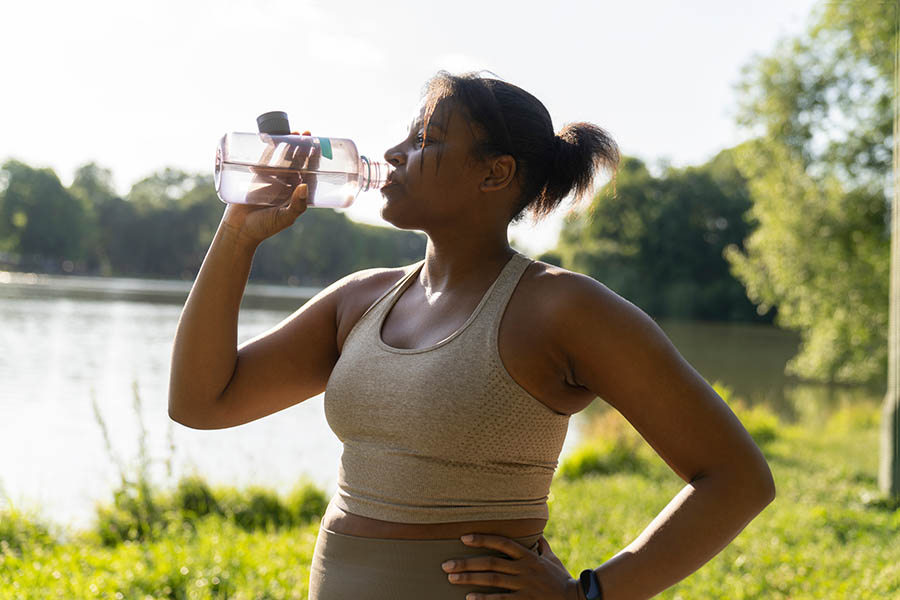
Water – the elixir of life. It makes up roughly 60% of the human body and nearly three-quarters of the brain. This calorie-free powerhouse quenches thirst, supports countless bodily functions and helps keep us feeling our best. Yet many Americans still aren’t drinking enough of it.
According to recent data from the Centers for Disease Control and Prevention (CDC), U.S. adults drink an average of about 44 ounces of plain water per day, while children and adolescents consume about 23 ounces. Although that’s an improvement from previous decades, many people still fall short of recommended hydration levels.
The National Academy of Medicine recommends approximately 2.7 liters (91 ounces) of total water intake each day for women and 3.7 liters (125 ounces) for men. That total includes water from beverages and moisture-rich foods such as fruits and vegetables.
Instead, many of us reach for specialty coffees, sodas and other sweetened beverages. While coffee and tea can contribute to your daily fluid intake, water remains the healthiest zero-calorie option for staying hydrated. When we don’t get enough fluids, dehydration can sneak up on us before we realize what’s happening.
Here are a few reasons staying hydrated matters:
- Your brain works better. Even mild dehydration can affect concentration, memory, mood and alertness, leading to fatigue, headaches and difficulty thinking clearly.
- Your digestive system benefits. Adequate fluid intake helps move food through the digestive tract, supports nutrient absorption and can reduce the risk of constipation and kidney stones.
- Your heart doesn’t have to work as hard. When you’re dehydrated, blood volume decreases, making the heart work harder to circulate oxygen and nutrients throughout the body.
- Your energy and sleep may improve. Hydration helps support normal body functions that contribute to better energy levels during the day and recovery at night.
- Your body can regulate temperature more effectively. Proper hydration becomes especially important during the hot, humid Lowcountry summers, helping prevent overheating and heat-related illness, particularly in children, older adults and those who spend time outdoors.
Don’t forget that about 20% of your daily water intake can come from foods, especially fruits and vegetables such as watermelon, cucumbers, oranges and strawberries.
So drink up, enjoy plenty of fresh produce and make hydration a daily habit. Your brain, heart and body will thank you for it.